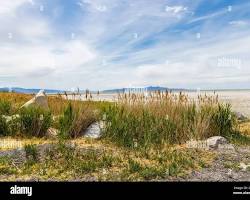
“Managing the entire expanse of the Great Salt Lake depression presents cost-prohibitive infrastructure liabilities. This framework introduces a localized, high-efficiency mitigation strategy focused on creating and maintaining two managed, low-cost estuaries at the terminal outflows of the Weber River and Jordan River. By anchoring permanent wetlands at these specific river mouths, we maximize the ecological benefit of existing inflows to maintain critical local habitats. Concurrently, targeted moisture-barrier stabilization is deployed across key exposed lakebed areas to suppress fugitive dust, delivering a comprehensive, fiscally sound environmental mitigation model for regional agricultural and municipal protection.”.
[April Spring Flood] ➔ Diverted to Alfalfa Spreading Basins ➔ Recharges Aquifer ➔ Earns “Water Credits”
[August Canal Deficit] ◄───────────────────────────────────────────────────────────────┘
(Pumped back up for late-season crops)The Business Case for Growers:
- The April Surplus: Because Utah springs are cold, April irrigation demand is low. Irrigation districts can divert high-sediment spring floodwaters into dedicated spreading basins.
- Alfalfa as an Engine: Planting deep-rooted alfalfa in these basins utilizes the taproots to maintain soil macropores, preventing fine silts from sealing the basin floor.
- The August Benefit: Under Utah’s regulatory framework, water recharged in April generates pumping credits. When canal flows drop in August and irrigation demand peaks, growers can pump that stored water to secure high-value crops.
- Saltwater Barriers: This massive injection of freshwater inflates the localized water table, creating a hydraulic ridge that prevents the hyper-saline lake water from intruding into fresh agricultural wells.
4. The Role of Precision Ag-Biotech
Modern agricultural consulting firms and S-Corps are the technical architects of this transition. By pairing precision hydrology with cutting-edge crop genetics—such as CRISPR-bred, salt-tolerant wheat and specialized potato varieties—growers can maximize yields in brackish transition zones. Furthermore, utilizing crops with high nitrogen-use efficiency ensures that rapid aquifer recharge does not leach harmful nitrates into the regional drinking water supply.
The Bottom Line: By shifting from a mindset of absolute scarcity to one of infrastructure management, Utah can protect its agricultural water rights, secure public health, and stabilize the Great Basin for generations to come.
“Detailed water market models—incorporating speculation, hedging, and shorting risk management—alongside localized dust control strategies are available for regional stakeholders, county representatives, and environmental engineering firms.”
Consulting Inquiries: michael@agaquifer.com
Direct Portal: michael@ michaelcrobertsphd.com
Office Location: Tremonton, Utah