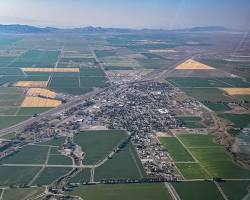
The Humboldt River Market & Pipeline Solution
A Capital-Driven Blueprint for Nevada’s Water Future
Nevada’s current management of the Humboldt River basin faces an existential gridlock. Downstream users in Lovelock hold senior surface water rights under the Humboldt Decree, yet upstream groundwater pumping in areas like Winnemucca inevitably intersects the river’s flow.
The state’s current playbook—using programs like Assembly Bill 104 and Senate Bill 36 to buy out groundwater rights cheaply and permanently retire them—destroys multi-generational asset values and shrinks the regional agricultural tax base. Furthermore, simply forcing water to “flow naturally” down hundreds of miles of open, high-desert riverbed means massive volumes are lost entirely to desert evaporation and transit draft before ever reaching its destination.
The solution is not regulatory curtailment or cut-rate liquidations. The solution is an Open-Market, State-Sanctioned Water Bank that unlocks the true scarcity value of water. By allowing open speculation and trading, we can artificially generate the private capital required to build a closed-conduit pipeline from Winnemucca to Lovelock—protecting farm balance sheets, eliminating evaporation traps, and keeping every drop of water within its basin of origin.
Phase 1: Unlocking Balance Sheet Value Through Speculation
The primary barrier to water markets in northern Nevada has historically been political panic—specifically, the fear that an open market means local assets will be strip-mined and exported to California or Las Vegas. To prevent this, the Humboldt Water Bank is established as a Closed-Loop Basin Stabilization District. Water can be traded, but it can never legally leave the hydrographic boundaries of the Humboldt Basin.
Within this boundary, open market speculation is actively encouraged to drive price discovery:
- From Liability to Appreciating Asset: Instead of face-value state buyouts that permanently retire a grower’s right to irrigate, water rights are converted into fluid, bankable “Storage Credits.” Because these credits can be openly traded, leased, or held for market upside, their value instantly appreciates.
- Collateral for Modernization: Rather than defunding operations, these high-value water assets stay directly on the growers’ balance sheets. Producers can leverage this newly unlocked asset equity to finance advanced conservation infrastructure—such as subsurface drip irrigation.
- The Conservation Dividend: When a grower uses subsurface drip to cut their consumptive use by 30%, that surplus isn’t surrendered to the state. The grower banks it, leases it to upstream industrial users or mining operations at peak market pricing, and retains their core agricultural business.
Phase 2: The Two-Tiered Market & The Funding Engine
To keep local farming communities whole while exploiting industrial capital, the water bank operates under a strict, asymmetric trading matrix:
1. Ag-to-Ag Internal Node Protections (Right of First Refusal)
To maintain regional production, agricultural users within a specific hydrographic node (e.g., Winnemucca) hold a mandatory 30-day Right of First Refusal to lease or purchase any water credits generated by neighboring farmers at a regulated, stable baseline rate. This prevents out-of-sector entities from cornering the market and starving local agriculture.
2. The Industrial/Mining Escalator
When water is leased outside of the agricultural sector—such as to mining operations along the Carlin Trend or regional industrial processors—the transaction is un-capped, letting open-market speculation drive the price to its true economic peak.
Every out-of-sector trade triggers a mandatory 25% infrastructure development fee. This premium revenue is legally firewalled; it cannot be diverted to the state’s general fund. It flows directly into a dedicated account: The Humboldt Closed-Conduit Pipeline Fund.
Phase 3: The Engineering Fix — The Winnemucca-to-Lovelock Pipeline
Currently, when senior water rights are released from upstream nodes to satisfy downstream rights in Lovelock, sending that water down the raw, unlined Humboldt River channel results in catastrophic transmission losses.
The speculation-driven infrastructure fund completely bypasses this physical bottleneck by building a dedicated, closed-conduit pipeline running parallel to Interstate 80, linking the upstream banking nodes directly to the agricultural gates of Pershing County.
[Upstream Market Trades] ──► [25% Speculation Fee] ──► [Pipeline Fund] ──► [Closed Pipeline Delivery]
- Zero Evaporation, Zero Transit Loss: By moving Pershing County’s senior share through a closed pipe rather than an open riverbed, transmission loss drops to near-zero. If Lovelock calls for 20,000 acre-feet of decreed water, the pipeline pulls exactly 20,000 acre-feet out of the upstream node. Under the status quo, the state must let significantly more water flow past Comus just to ensure a fraction survives the journey south.
- Activating Managed Aquifer Recharge (MAR): To ensure Winnemucca’s local water table is protected, the pipeline fund finances Managed Aquifer Recharge (MAR) infrastructure. During high spring snowmelts, seasonal floodwaters are captured before they can escape downriver to evaporate. This water is actively injected into the shallow alluvial aquifer via Rapid Infiltration Basins (RIBs).
This groundwater storage is credited to the water bank. When Lovelock calls for its senior water during the dry heat of August, the supply isn’t clawed back from Winnemucca’s active agricultural pumps—it is drawn directly from this seasonal, sub-surface savings account and sent straight down the pipe.
Summary of Regional Benefits
| For Upstream Groundwater Pumpers | For Downstream Senior Right Holders (Lovelock) | For the State of Nevada |
| Protects operations from regulatory curtailment. | Bypasses the river’s transit draft; guarantees clean, timely delivery. | Solves the streamflow depletion conflict without multi-million dollar buyouts. |
| Elevates water rights into premium balance-sheet assets. | Eliminates reliance on the highly inefficient Rye Patch Reservoir storage. | Keeps all water strictly within the Basin of Origin. |
| Generates private revenue to fund advanced on-farm irrigation upgrades. | Secures the physical water supply regardless of mid-stream river conditions. | Preserves the rural agricultural tax base and economic baseline. |
By pairing the hydrogeological reality of sub-surface storage with the economic reality of open-market asset valuation, this blueprint breaks the decades-long Humboldt gridlock. It respects Nevada water law, protects the grower, and lets market speculation foot the bill for the infrastructure that saves the basin.